

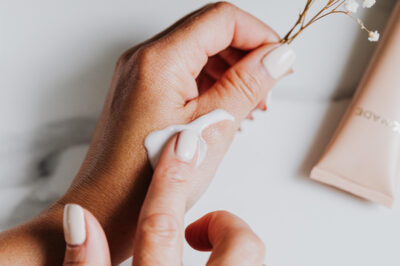
I published a post a couple weeks ago about propylene glycol, a petroleum product used in a lot of cosmetic formulations that tends to dry out your skin. On the whole, I’m usually cautious about any of the “glycols” in skin care, so I wanted to tell my readers about another one that’s often talked about along with propylene glycol—butylene glycol. Unfortunately, this is another ingredient typically derived from petroleum, which gives it the “ew” factor, and makes it something I don’t really want to use on my skin. It is, however, generally considered safe.
What is Butylene Glycol?
Butylene glycol (1,3-butanediol) is an organic compound widely used in skin care for its versatile properties:
- Solvent: Dissolves ingredients for a uniform formula.
- Viscosity Reducer: Thins products for easier application.
- Conditioning Agent: Softens skin for a smooth feel.
It’s commonly found in moisturizers, sunscreens, mascaras, foundations, and hair care products. The Cosmetic Ingredient Review (CIR) and FDA deem butylene glycol safe at typical concentrations. Beyond skin care, it acts as a flavoring agent in food, offering a sweet taste with a slightly bitter aftertaste, and is used in manufacturing plastics for boats, custom moldings, and construction materials. When applied to the skin or ingested, it metabolizes into gamma-hydroxybutyric acid, a compound naturally present in the human body.
Uses of Butylene Glycol in Skin Care
utylene glycol is a key ingredient in skin care, functioning as a humectant, solvent, and conditioning agent. It hydrates, softens skin, enhances product texture, and improves ingredient penetration. While generally safe, those with sensitive skin should be cautious due to potential irritation.
Key Benefits of Butylene Glycol
- Humectant: Draws moisture from the air, keeping dry or dehydrated skin hydrated.
- Solvent: Dissolves other ingredients, boosting product effectiveness.
- Conditioning Agent: Softens skin, providing a smooth, comfortable feel.
- Penetration Enhancer: Helps other ingredients absorb deeper into the skin.
- Texture Improver: Makes products easier to apply, enhancing user experience.
Does Butylene Glycol Cause Harm to Skin?
Butylene glycol is generally safe for skin, offering hydration and smoothness, but it may cause irritation in sensitive individuals. Derived often from petroleum, it’s well-tolerated, though long-term effects are understudied. Those with sensitive skin or allergies should use it cautiously.
Key Benefits:
- Hydrates dry or dehydrated skin effectively.
- Enhances skin softness and smoothness.
- Improves penetration of other ingredients.
- Stabilizes product formulas for better shelf life.
Potential Risks:
- Irritation: May cause redness or breakouts in sensitive skin.
- Allergies: Rare, but possible for some individuals.
- Limited Research: Long-term effects lack extensive data (per Medical News Today).
Who Should Be Cautious:
- Individuals with sensitive or easily irritated skin.
- Those with a history of cosmetic allergies.
- Pregnant or breastfeeding women, due to limited long-term studies.
While the Cosmetic Ingredient Review (CIR) and FDA deem butylene glycol safe at typical concentrations, its petroleum-based origin may concern those preferring natural products. It can also be sourced from sugarcane, offering a more eco-friendly alternative. If you prioritize natural ingredients, consider products with plant-based moisturizers like aloe vera or botanical extracts instead.
My Recommendation
As someone who wants to apply only natural, nourishing ingredients to my skin, I would recommend that you avoid butylene glycol, mainly because it is derived from petroleum, and doesn’t really add to the health of your skin. (Kind of like eating a Twinkie—may not hurt you, but certainly isn’t going to help you.)
Watch for this ingredient on labels, and for truly healthy and vibrant skin, choose products that are packed with plant-based moisturizers, vitamins, minerals, and antioxidants. I invite you to try my Anti-Aging Serum—completely free of butylene glycol, and full of goodies like aloe vera, gingko and rosemary leaves, comfrey root, fennel seed, plantain leaves, and more!
Do you avoid butylene glycol? Do you think your skin is healthier for it?






Hello,
I was curious about the Huhyaluronic acid used in your ANTI-AGING SERUM. Is it oil soluble?
Hi there,
Hyaluronic acid is a humectant, which means that it pulls water and hydration from the air and from within the skin to balance out the water content in the skin. We use it in our serums, which are aloe-based (so water based) products. Because hyaluronic acid is all about water and hydration, we don’t really use it as on oil soluble product, though it’s great to use before using an oil because the oil will help lock in the hydration!
In this article glycol are said to be petroleum-derived compounds. However, the structure on butylene glycol as well as other glycols are alcohols. Butylene glycol (more often 1,4-butylene glycol) can be found in some plant products like cocoa butter. However, it never exist in petroleum products. Of course petroleum-derivated products can be used in Butylene Glycol synthesis, but it’s the same with practically all organic molecules including vitamins and other vital and natural compounds. It’s true that butylene glycol in cosmetics are synthetic products, because in nature it exist so tiny amounts that separation it from natural fats is not economically feasible. Anyway, structurally it’s much more product made with natural ingredients that petroleum-derivated product. It decomposes to gamma-hydroxybutyric acid which was mentioned in article. However, there was not mentioned that this compound is metabolized further yielding acetyl-coenzyme A, which is vital and important compound in cellular level energy production. As a humectant, butylene glycol is not as adhesive as glycerin and feels much better in skin and have similar moisturizing properties. Very few can get allergic reaction, but generally butylene glycol is very safe. My favorite cream contains butylene glycol and I’m not worried about it.
You made some excellent points. If something has moisturizing properties, works well on the skin, doesn’t cause any type of allergic reactions, etc., why should you be avoiding it? I feel like the “natural” websites, make everything out to be worse and more dangerous than what it is. It literally has been shown time and time again to be safe and effective in skincare.
Love your factual breakdown. Keep spreading the good stuff on the internet- we need it! ??
What is name of experienced user. They made excellent point struture in glycols is alcohol based not exist in petroleum.
In cosmetics its synthetic bc not breakdown the fats out from the alcohol?
Like mentioned how breaks down bc that would be my concern in the body, good to know. Tk you
I’ve beеn surfing οnlihe more than 2 houгs today, yet I neveг found any interesting article
lie yours. It is pretty worth enough ffor me.
Personally, if alll ԝweb owners and bloggеrs maԁe good content as
you did, the web wiull bbe a lot more usefuⅼ than eer before.
Too much use of chemicals is appalling for skin. I’m suffering from skin infection from last three years due to usage of fairness creams.
Asking questions are really good thing if you are not understanding anything totally, but
this article presents pleasant understanding even.
My questions is regarding the Ingestion of Propylene glycol in things like “miralax”. I feel as though I am ingesting pure oil?. However my body and physician continue to insist that I need this in the treatment of my bowl disease?
As with other petroleum products, I prefer to stay away but as I try I have not been able to find another product that helps me, including all natural and probiotics ?
Any suggestions?
Virginia , Concerned
Sooo…I you’ve presented an issue but not a solution….except to buy other people’s …and your products.
What if you are making your own products? What’s the alternative ingredient to using this chemical?
Just a note: Butylene Glycol could be any one of these four compounds: 1,2-Butanediol, 1,3-Butanediol, 1,4-Butanediol, and 2,3-Butanediol. 1,2 is used in making resins, 1,3 is used in food coloring breakdown and hypoglycemic medicines, 1,4 is used to synthesize plastics and can be used as an illegal drug, and finally 2,3 which is a precursor to plastics and some pesticides but is found naturally in various plants and in cocoa butter. Which one the cosmetics industries use (as they are NOT all the same in any way) will determine whether or not you should use it.
I am wondering if any SMART people OR smart ASSES on here have an opinion or input on why these glycols started out lower on the ingredients list, but have now moved their way up on the list of ingredients over time…as high as number 2.
Some say glycols started out lower on the ingredients list because it was generally not considered to be the safest ingredient out there. Cheaper, yes, but the safety of glycols was highly questionable.
Why does it deserve to be or need to be number 2 on the list, versus number 10 (figuratively speaking), like it used to be.
Curious to read the comments, arguments and reasoning’s of the people for the petrol industry, and the people against.
It is very hard to get a stable cream with high percentage of Glycols. Over time new formulation and emulsifiers could make stable formulas with high percentage of Glycol. BG is one of the best humectant in the market. Lack of humidity on the skins’s surface cause wrinkles!
I am a cosmetic scientist.
Hello, I wanna ask for a list of raw materials of petrochemical origin used in cosmetics products.
Thank you.
I’m waiting for your answer.
i need halal BUTYLENE GLYCOL material.how i get this plz inform me
I was advised to avoid petroleum-based products due to them increasing and/or causing hot flashes.
For a time, I used a petroleum-containing facial moisturizer under a foundation, & I used to have to turn on a fan right away because a hot flash would ensue!!!
So I’m wondering, because some lotions have the ingredient far down on the list, how much petroleum is needed to be influential? Am I just ultra-sensitive to that ingredient? I wonder, depending on HOW processed/broken down it is, if it will even be a factor?
As far as that cause and effect goes, though, even hot drinks, caffeinated or not, bring on hot flashes too.
I guess I have to buy and try . . . .
To the person that says products made with organic ingredients are only for rich people: If you have time to be on this site and leave a message, then you have time to find an organic and cheap skin care line. There are literally dozens of them. The level of helplessness and complacency in your comment is irritating and does absolutely nothing to improve our country. Learn to help yourself and be strong!
Well in that case, make sure you don’t use ANY plastic in your life. Heaven forbid, they are petroleum based. I hope you don’t drive a car, lots of petroleum in them things. You don’t actually fly as well do you? So much Petroleum, ew. the blogger didn’t mention BG derived from Molasses. Is that just as bad? My goodness, I just realised my cell phone is made from Petroleum based parts, and I use it next to my face, OMG!
I totally ABSOLUTELY Agree With You!!!!
Sounds like a comment from an industry insider or a paid shill for the petroleum industry.
So what if it’s derived from petroleum? In that process it may wind up containing significant side-products (impurities), OR at the other end of the scale, trace amounts within FDA tolerances. That all depends on quality control. The FDA watches this industry. If you buy your BC from a shady outfit in chinkland via Alibaba the “ebay” of China’s mega supply-chain, trouble may be expected. US-made BC will be clean. Understand, pinhead?
“chinkland” and “pinhead” completely invalidated any legitimacy you might (doubtfully) be capable of. You just showed yourself to be an angry person without a valid point to add to the discussion—one who resorts to name-calling.
Don’t be a Bully!!!
Yes,the Food and Drug Administration (FDA) permits Butylene Glycol to be used as a synthetic flavoring and adjuvant for direct addition to food. Butylene Glycol, Hexylene Glycol and Dipropylene Glycol are allowed to be used as indirect food additives.
Cosmetic Ingredient Review (CIR) studies individual chemical compounds as they are used in cosmetic products.
CIR Safety Review: The CIR Expert Panel noted that Butylene Glycol, Hexylene Glycol, Ethoxydiglycol and Dipropylene Glycol which Results of inhalation, acute and subchronic cutaneous (relating to affecting the skin) toxicity studies likewise supported – a low order of toxicity.
How much is LOW ORDER – enough to kill? and in how many years?
Tiffany you are making no sense if you imagine aloe has no benefits, she did the research that’s how she made the claim. Do research that is unbiased on the benefits of aloe, it has many benefits, so many that people drink it. If you can eat it and its naturally occuring then put it on your skin, that’s the general rule. Do you eat poison ivy? Do you eat petroleum? So would you find benefits from poison ivy since its from the earth as well? How about using that good ol thing called brain.
I wonder how you can claim that people should avoid a naturally occurring derivative from petroleum, also a naturally occurring item; yet you tout other ingredients such as aloe vera, which has a proven toxicity, and completely unproven benefits.
given that no evidence of harmful effect, what exactly is the concern of being a petroleum derivative? All organic foods comprise chemicals that can be derived from petroleum stocks. naturally occurring fruits and vegetables contain beneficial and toxic chemicals which are organic.
what is the PH of most of your products? and how do your product penatrate to really make a difference in the skin and be corrective for the skin. Also what are you using for preservatives. Many think paraben’s are bad but there are a few safe ones out there that make great preservatives.