

Table of Contents[Hide][Show]
Key Takeaways:
- Argan oil consists primarily of oleic acid, acting as a rich protective shield that locks moisture into dry or mature skin.
- Rosehip seed oil is abundant in linoleic acid and antioxidants, making it a “dry oil” that quickly renews the appearance of oily or blemish-prone complexions.
- The choice depends on your bio-individuality: whether your skin requires the deep nourishment of “The Shield” (Argan) or the balancing touch of “The Renewer” (Rosehip).
- You don’t have to limit your ritual to just one; blending or layering creates a synergistic approach to total skin health.
Standing in the skin care aisle can often feel like navigating a maze, especially when faced with the two icons of the botanical world: Argan and Rosehip. It is easy to feel indecisive, wondering which amber-hued elixir holds the secret to your glow.
The truth is, protecting your skin barrier isn’t about choosing a “better” oil in isolation. It’s about understanding your skin and deciding between argan oil and rosehip seed oil based on what your unique skin actually needs.By decoding the science behind “Liquid Gold” and the “Restorative Multitasker,” we can move past the confusion and help you curate a mindful ritual that nourishes your skin exactly where it needs it most.
Argan Oil: The “Liquid Gold” Protector
Sourced from the kernels of the Moroccan Argan tree, this legendary oil has been cherished for centuries as a source of deep sustenance. It is renowned for its rich concentration of Vitamin E and fatty acids, specifically oleic acid. Think of Argan oil as a comforting, heavyweight blanket for your face—it acts as “The Shield.” Because of its heavier molecular weight, it excels at creating a barrier that locks hydration in. This makes it a wonderful choice for dry, mature, or barrier-compromised skin that craves deep, lingering nourishment rather than instant disappearance.
Rosehip Seed Oil: The “Restorative” Multitasker
On the other side of the spectrum lies Rosehip Seed Oil. Unlike the heavy shield of Argan, Rosehip is celebrated as “The Renewer.” It is potent in Vitamin C and naturally occurring Vitamin A alongside high levels of linoleic acid.
This unique profile allows it to penetrate rapidly, helping to improve the appearance of skin tone and texture. Because of its versatility and ability to revitalize the look of the skin without heaviness, we have chosen Rosehip as the cornerstone ingredient across our collection. You can find this potent botanical driving the results in our Anti-Aging Facial Oil, balancing the complexion in our Herbal Facial Oil for Oily Skin, and calming reactivity in our Herbal Facial Oil for Sensitive Skin.
The Science of “Why”: Oleic vs. Linoleic Acid
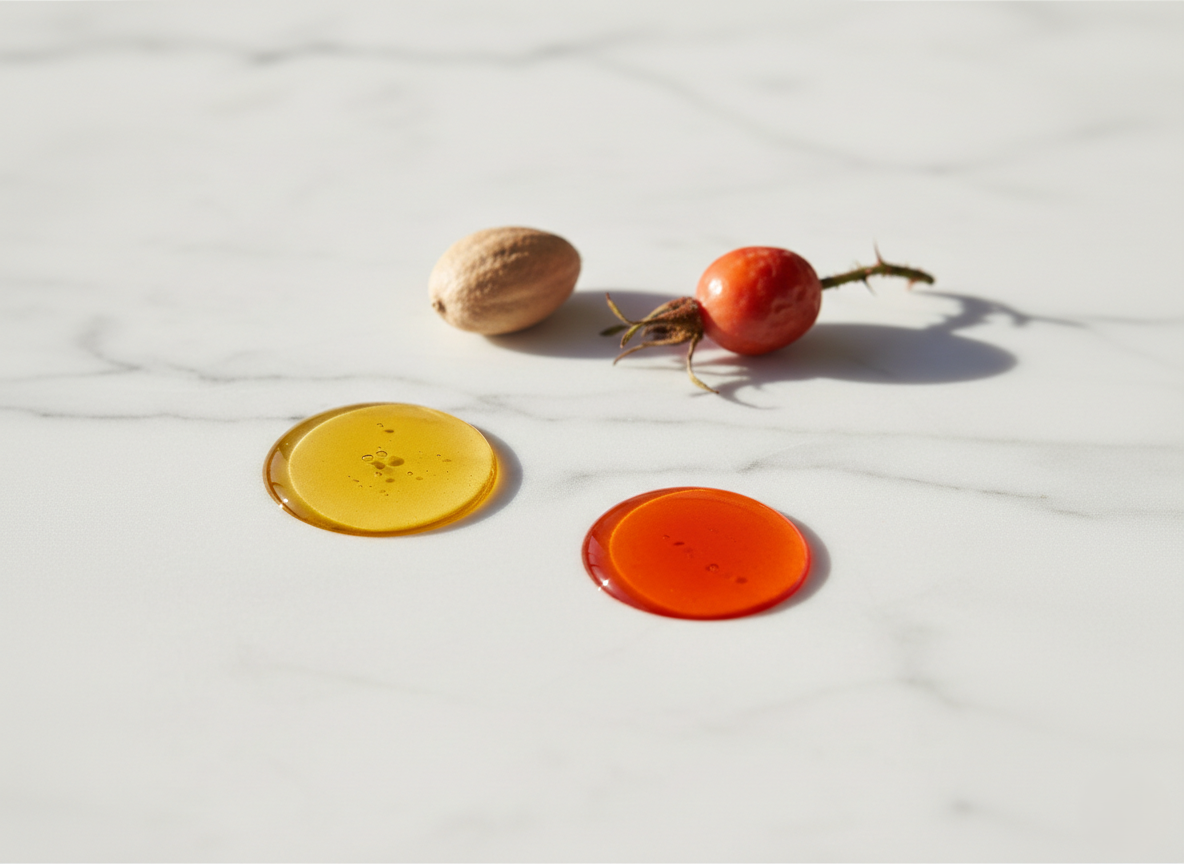
The “Aha! moment” in selecting facial oils comes down to understanding the balance of fatty acids. You can visualize this using a simple “Sponge vs. Shield” analogy.
Argan oil is high in Oleic Acid, which is thicker and richer; it acts like a shield, sealing moisture in. This is exactly what skin that feels tight or parched is crying out for. Rosehip oil, conversely, is high in Linoleic Acid, which is lighter and thinner; it acts more like a nutrient-dense fluid that balances sebum. This is ideal for skin that feels congested or oily, as it moisturizes without clogging.
Choosing the wrong fatty acid profile is often the hidden culprit behind why a “miracle” oil might feel insufficient for you.
Argan Oil vs. Rosehip Oil For Face: The Comparison
1. For Blemish-Prone and Oily Skin
Winner: Rosehip Oil.
Why: Its high linoleic acid content is crucial here. Use of high-linoleic oils helps balance natural oils and keeps pores looking clear by keeping sebum fluid, rather than heavy and waxy. While Argan is gentle, Rosehip feels significantly lighter and helps create a smoother-looking appearance while working to decongest pores.
2. For Dry and Mature Skin
Winner: Argan Oil.
Why: When your skin barrier is thirsty, it needs an occlusive layer. The rich oleic acid content acts like a breathable “raincoat,” sealing in hydration and providing intense, restorative moisture to diminish the appearance of wrinkles and keep the skin feeling supple.
3. For Uneven Skin Tone and Texture
Winner: Rosehip Oil.
Why: Thanks to its natural bio-actives, including Vitamin A and C, Rosehip is superior for revitalizing the complexion. It helps brighten the look of your face and reduce the appearance of dullness that often accompanies environmental exposure. For those seeking a potent blend to target uneven texture, applying a targeted serum under Rosehip oil pairs beautifully to truly enhance that radiant “glow.”
Elevating the Ritual: Synergy and Quality Standards
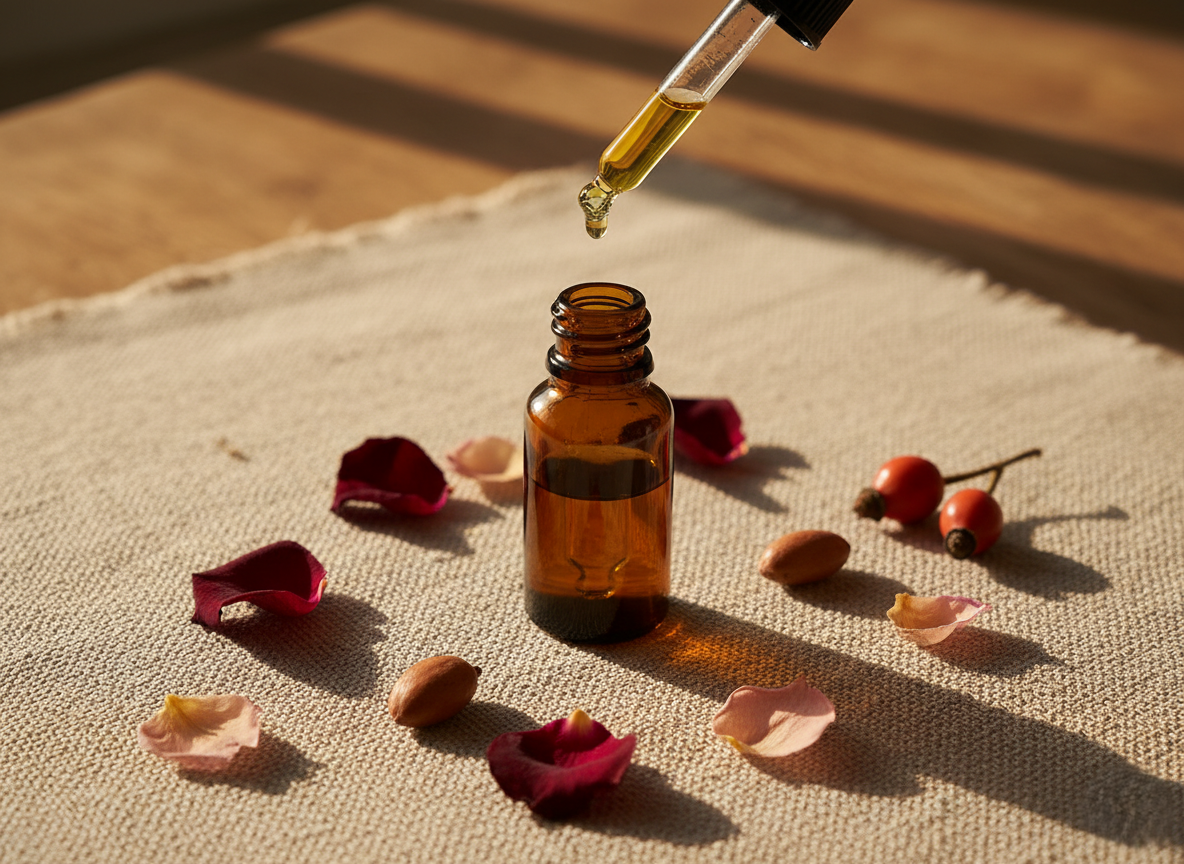
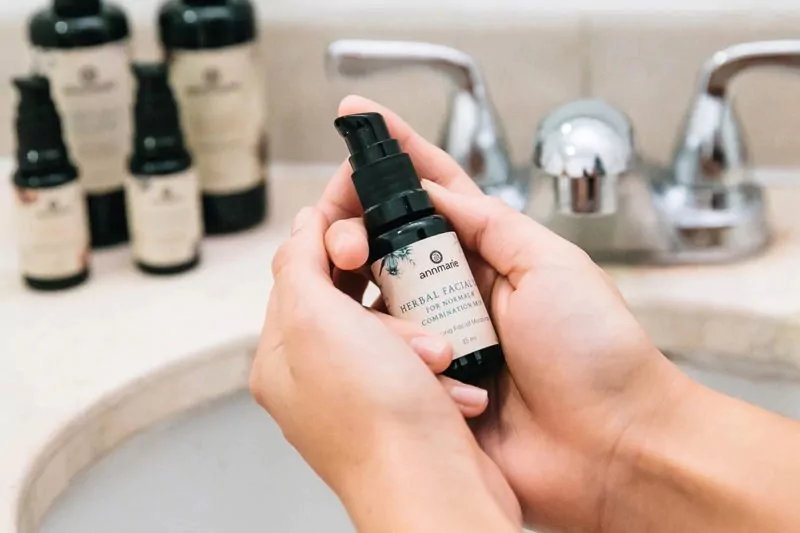
While single oils are powerful, the true magic often lies in synergy. Instead of trying to mix oils yourself, look for formulations that blend the renewing power of Rosehip with other harmonizing botanicals. For instance, our Herbal Facial Oil for Normal and Combination Skin utilizes Rosehip oil as a base, blending it with herb-infused Jojoba and Grapeseed oils. This creates a formula that provides the “glow” of Rosehip with the perfect level of moisture, ensuring your skin looks healthy and balanced without feeling too heavy or too light.
However, regardless of which oil or blend you choose, the result depends entirely on the purity of the source.
Do not be fooled by flashy packaging; you must look for “Cold-Pressed” and “Unrefined” on the label. Industrial heat extraction destroys the delicate vitamins in both Rosehip and Argan oils, rendering them ineffective. Use your senses as a guide: Rosehip oil should be a vibrant orange or red hue with an earthy scent, while Argan should be golden and smell slightly nutty. If the oil is clear and odorless, it has likely been refined and stripped of its nutrients.
Conclusion: Your Skin Knows Best
Ultimately, Argan is your “Comforting Blanket,” wrapping the skin in heavy, protective hydration, while Rosehip is your “Energizing Tonic,” renewing skin texture and clarifying tone.
Skin care is a journey of self-discovery, not a rigid set of rules. We encourage you to try one, or both, and mindfully observe how your skin responds. Whether you choose argan oil vs. rosehip seed oil, or a harmonious blend of both, trusting your skin’s intuition is always the most beautiful choice.
Frequently Asked Questions
What plays better with makeup: Argan or Rosehip oil?
Rosehip oil is generally considered a “dry oil,” meaning it absorbs rapidly and leaves a matte finish, making it an excellent primer for makeup. Argan oil is richer and may cause makeup to slip if not given ample time to absorb.
Will Argan oil clog my pores if I have acne-prone skin?
Argan oil has a comedogenic rating of 0, meaning it is non-clogging for most people. However, because it is rich in oleic acid, those with very oily skin might find it heavier than Rosehip oil, which is actively helpful for balancing the appearance of “clean pores.”
Can I mix these oils with my moisturizer?
Absolutely. Adding a drop of oil to your moisturizer is a fantastic way to boost lipid content. For a lighter boost, mix in Rosehip; for a richer, more occlusive boost on dry nights, mix in Argan.
Does Rosehip oil really help with acne scars?
While we cannot claim it “removes” scars, Rosehip oil is rich in antioxidants and essential fatty acids that help “renew the look of beautiful skin” and improve the appearance of skin tone and texture over time.





Leave a Reply