

Table of Contents[Hide][Show]
Key Takeaways:
- Skin purging is often described as a temporary change in the way the skin looks and feels when introducing a new product, sometimes showing up as a period of increased texture before the skin appears more settled again.
- When people describe “purging,” they often notice temporary changes in areas where they already tend to see uneven texture. This phase may appear for a short period of time and gradually look more settled with consistent use.
- Understanding how your skin looks and feels over time can help guide your routine—whether that means continuing with your ritual or taking a gentle pause.
- Supporting this transition with incredibly gentle, hydrating botanicals can help the skin feel more comfortable and leave it looking soft and balanced.
We’ve all been there: that moment of quiet hesitation when you introduce a beautiful, botanical blend into your routine, hoping to support a fresh, revitalized look—only to notice your skin suddenly looking more textured than expected. It can feel confusing, leaving you wondering whether to pause or continue with your ritual.
This often brings up common questions—what is skin purging, and how can you tell if it’s simply a temporary shift in your skin’s appearance? In this guide, we’ll gently explore what people mean by this phase, share a general timeline, and offer guidance on how it may differ from other types of texture—along with simple ways to support a more balanced, intentional routine.
What Is Skin Purging? Exploring the True Meaning
If you’ve ever wondered what “purging” means in skin care, it can be helpful to think of it like a deep spring cleaning for a beloved home. When you sweep a dusty room, things can briefly stir before settling again. In a similar way, when introducing new products, some people notice temporary changes in the way their skin looks and feels.
These shifts may show up as increased texture or small surface irregularities that seem to appear more quickly than expected. Rather than something entirely new, it’s often simply a reflection of what was already present beneath the surface becoming more noticeable for a short time. This phase can feel like a transition as your skin adjusts to a new routine.
So, is skin purging normal or necessary? Experiences vary—some people notice this kind of temporary shift, while others do not. If it does happen, it’s often a sign that your skin is adjusting to a new product or routine.
You might also wonder whether this is a “good” or “bad” thing. Rather than viewing it that way, it can be helpful to see it as a temporary phase. A gentle, supportive routine—beginning with hydrating, botanical-based cleansers—can help keep the skin feeling comfortable and balanced during this time.
Recognizing the Signs: What Does This Phase Look and Feel Like?
Before deciding how to move forward, it can be helpful to notice how your skin looks and feels during this phase. Below, we walk through some common experiences, a real-life example, and a general timeline to help you better understand what you may be noticing along the way.
Common Signs and Real-Life Examples
When people talk about “purging,” they’re often describing temporary changes in the way the skin looks and feels—such as small areas of uneven texture or tiny surface irregularities. These are often noticed in areas where texture tends to show up more easily, like the T-zone, chin, or forehead. They may appear relatively even and subtle, rather than highly noticeable or inflamed.
Here’s a simple example: imagine trying a new botanical mask and noticing a few small patches of uneven texture appear on your chin, an area where you’ve seen similar texture before. With time, those areas may begin to look more settled, eventually revealing a smoother, more refreshed appearance.
Navigating Sensitivity: What Might You Notice?
Another common question is whether the skin might feel different during this phase. Some people notice their skin feeling a bit more sensitive, slightly dry, or occasionally a little tight or lightly itchy as they adjust to a new product or routine.
Rather than seeing this as a cause for concern, it can be helpful to treat it as a cue to slow down and offer your skin a bit of extra hydration and care.
A Gentle Week-by-Week Timeline
When introducing a new product, some people notice temporary shifts in how their skin looks and feels. While experiences vary, here’s a general pattern some may observe:
| Week | What Your Skin May Feel and Look Like |
| Week 1 | Slight sensitivity, a feeling of dryness, or small areas of uneven texture appearing in familiar areas |
| Week 2 | Texture may feel more noticeable, with tiny raised surface irregularities and occasional mild tingling |
| Week 3–4 | Areas may begin to look more settled, with texture appearing softer and more even |
| Week 5–6 | Skin may appear more balanced and refined, with a smoother overall look |
| After Week 6 | If the skin still feels unsettled, it may be a good time to simplify your routine and reassess what feels most supportive |
Skin Purging vs. Occasional Texture Changes: What to Know
Understanding how these temporary texture changes may show up differently can be one of the most helpful ways to navigate this transition. While they can look similar at a glance, the way they appear and shift over time may feel distinct.
Side-by-Side: Temporary Texture Changes vs. Other Surface Imbalances
| Aspect | Temporary Adjustment Phase | Other Surface Imbalances |
| Location | Often appears in familiar areas where you’ve noticed texture before (T-zone, chin, forehead) | May show up in new or unexpected areas |
| Appearance | Small, more uniform areas of uneven texture or tiny surface irregularities | More noticeable, uneven-looking areas that may appear more pronounced |
| Timeline | May appear for a short period before gradually looking more settled | May persist or feel unchanged over time |
| Sensation | Skin may feel slightly dry, lightly sensitive, or occasionally a bit tingly | Skin may feel persistently uncomfortable, more reactive than usual, or harder to settle |
| Response to your routine | Softens and looks more settled over time | Persists, becomes more noticeable, or stays the same |
| Overall Pattern | Often reflects a temporary adjustment to a new product or routine | May suggest the current routine isn’t the best fit for your skin right now |
Sometimes, you may notice texture appearing in entirely new or unexpected areas that doesn’t seem to shift over time. If that’s what you’re observing, it may be a sign that the formula isn’t the best fit for your skin right now, and simplifying your routine can be a supportive next step.
Common Factors: What May Be Influencing These Changes?
Understanding what may be contributing to these shifts can help you respond with more intention and care. These influences often fall into two gentle categories: the products you apply to your skin and everyday lifestyle factors.
The Impact of Skin-Renewing Ingredients
Many in our radiant community ask what may be behind a “purging” phase when introducing new renewing formulas. When bringing in products designed to refresh the skin’s surface, some people notice temporary changes in how their skin looks and feels. This can show up as a brief period of increased texture before the skin appears more settled again.
Some renewing companions may feel more noticeable than others, depending on the formula and how often it’s used. A gentle approach is to begin slowly—once or twice a week—and follow with a nourishing botanical oil to help the skin feel comfortable and balanced throughout the transition.
Botanical enzyme-based formulas, such as those found in plant-based blends, are often experienced as a softer introduction compared to more concentrated options. Higher concentrations of ingredients like vitamin C may be associated with a shorter, more subtle adjustment period for some.
Whatever you choose to introduce, patience and a nurturing touch are your greatest tools.
The Role of Internal Shifts
Different life stages can also influence how your skin looks and feels over time. Experiences such as pregnancy, the menstrual cycle, postpartum changes, and perimenopause are often reflected in shifts in the skin’s appearance, including changes in texture or overall balance. When these moments coincide with introducing new skincare, your skin may feel like it’s going through a period of adjustment.
A gentle reminder during pregnancy: many people choose to keep their routines simple during this time. Softer, botanical options—like plant enzymes, aloe, calendula, and chamomile—can feel like a more supportive match for this season. As always, it’s best to check with your care provider about any ingredients you’re unsure of.
Lifestyle Rhythms That May Influence the Transition
Your skin is often a reflection of your day-to-day experiences. Certain lifestyle patterns may be associated with how the skin looks and feels during a transition phase—things like elevated stress, irregular sleep, frequent friction from masks or fabrics, humid or urban environments, or a diet that includes more processed foods.
None of these are “wrong.” They are simply moments to soften, rest more deeply, and hydrate with extra intention as your skin moves through change. How you feel, rest, and move through daily life can be reflected in your skin in ways that are worth noticing and honoring.
How Your Unique Skin Type May Experience the Transition
Every skin is its own quiet ecosystem, and no two experiences look exactly the same. Oily and combination skin may go through a more visible transition, often in areas like the T-zone where texture tends to show up more easily.
Dry skin may experience a subtler shift, sometimes feeling a bit drier or more delicate during this time. Sensitive skin may feel a touch more reactive or flushed rather than showing visible texture, which is why a gentle approach can feel especially supportive.
Mature skin may move through a slower, more gradual transition, with changes appearing more subtly over time.
Tuning into your own skin’s patterns can help guide a more thoughtful, personalized approach to care.
A Gentle Ritual: Caring for Your Skin During the Transition
During this transition, one of the most helpful things you can do is pay close attention to how your skin looks and feels. This may not be the moment for harsh scrubbing or stronger exfoliants. Instead, a softer approach—paired with hydrating companions and a slower, more intentional pace—can help the skin feel more comfortable and supported.
Supporting Your Natural Moisture Balance
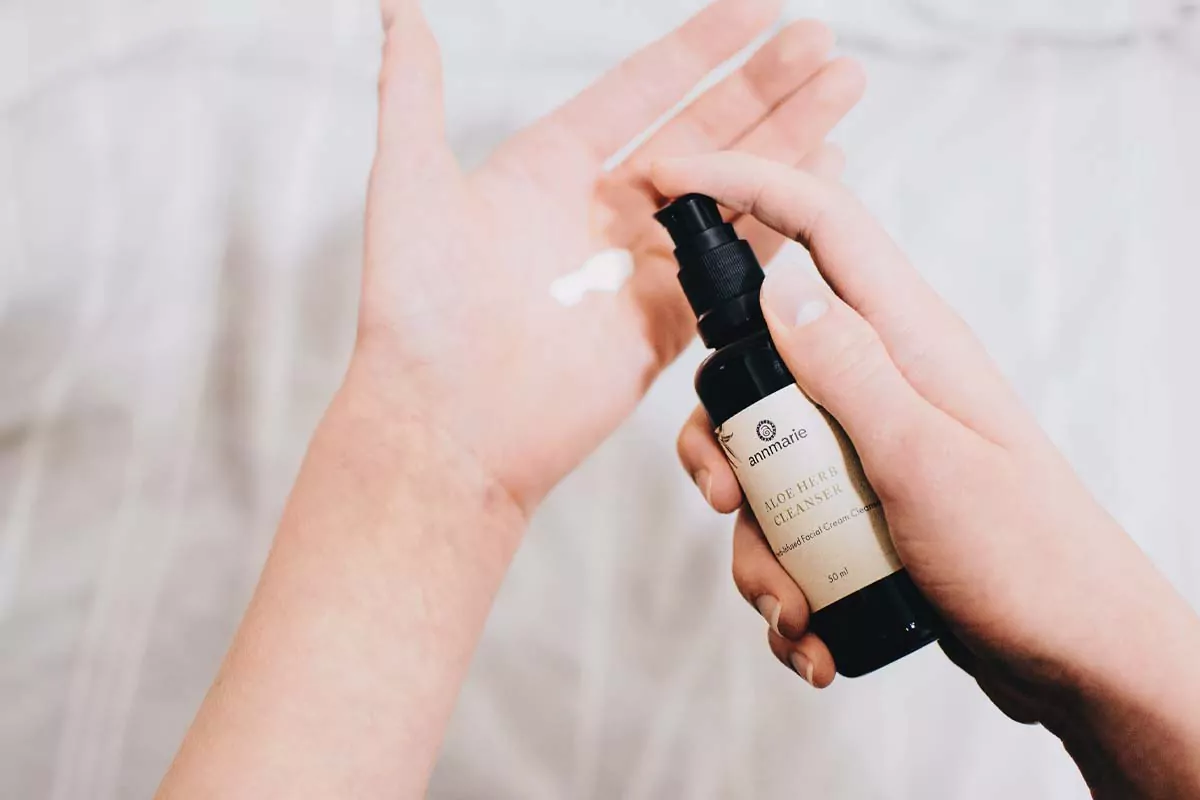
At the core of this comforting ritual is mindful cleansing. You want to gently sweep away dirt, oils, and daily buildup without leaving the skin feeling stripped. An intentional formula like our Aloe-Herb Facial Cleanser can be a supportive choice during this phase. Its aloe-rich, plant-based ingredients help the skin feel more comfortable and calm, leaving the face refreshed and softly cared for after each cleanse.
A simple daily rhythm may look like this: gentle cleansing twice a day, a hydrating mist between steps to maintain a fresh, comfortable feel, and a nourishing facial oil at night to soften the look of dryness. You might also consider pausing exfoliants, scrubs, and stronger renewing formulas until your skin feels more settled.
Botanicals to Embrace During This Phase
Certain botanical companions can feel especially supportive during a transition. Aloe vera and chamomile offer a soft, soothing feel. Centella asiatica and oat bring a gentle, comforting quality that skin in transition often welcomes. Jojoba and green tea help maintain a balanced, comfortable feel, while rosehip and squalane provide a lightweight, nourishing finish that layers beautifully during this phase.
On the other side, it can be helpful to gently step back from heavily fragranced formulas and more concentrated renewing products while your skin is finding its rhythm. Simplicity often becomes your greatest ally during a transition.
When It May Not Be a Simple Adjustment: Noticing Important Signals
Sometimes what appears to be a temporary shift may simply mean your skin isn’t responding well to a new product. A few things to pay attention to include noticeable changes that feel unfamiliar—such as sudden warmth, increased discomfort, or a sensation that feels quite different from your usual experience shortly after applying something new.
You might also notice areas that feel persistently uncomfortable or more reactive than expected. If that’s the case, it can be helpful to pause, simplify your routine, and return to the gentlest, most supportive products you have on hand. If needed, seeking guidance from a trusted skin care professional can also offer helpful clarity.
Gently Releasing Common Myths
A few myths quietly circulate around this topic, and letting them go can bring a sense of ease. The first is the idea that every reaction is a “purge.” In reality, not all temporary changes in the skin’s appearance fall into the same category.
The second is the belief that you should always push through. Sometimes the most supportive choice is to slow down or step back.
The third is that “purging” means the skin is releasing toxins. In most cases, what people are noticing is simply a temporary shift in the way the skin looks and feels.
And finally, there is the myth that a transition must happen for a product to be effective. Many people introduce renewing botanicals with little to no visible change at all.
Embracing Your Skin’s Natural Rhythm
Navigating a skin transition with ease often comes down to a bit of grace and a deeper understanding of what people mean when they refer to “skin purging.” This phase is often experienced as a temporary shift in the way the skin looks and feels, sometimes leading toward a softer, more luminous appearance over time.
You can approach it as an invitation to slow down, tune in to your skin, and move through a more intentional daily ritual.
If you’re looking for pure, thoughtfully crafted blends to support you through every season of your skin’s journey, explore our collection of organic skin care and care for your skin with the attention it deserves.
Frequently Asked Questions About Skin Purging
Should I stop using the product if I start noticing changes?
Gently observe. If the changes feel mild and show up in areas where you’re used to seeing texture, you may choose to continue at a slower pace.
If the experience feels noticeably uncomfortable, more reactive than usual, or appears in entirely new areas, it can be helpful to pause and simplify your routine while your skin settles.
Can I speed up the purging process?
Your skin moves at its own pace. Rather than trying to rush it, focus on consistent hydration, rest, and a simplified routine. Patience and a nurturing touch are often your most helpful tools.
What is skin purging from renewing ingredients really doing?
When introducing renewing ingredients, some people notice temporary changes in how their skin looks and feels, such as a brief increase in surface texture before it appears more settled.
Following with a calming facial oil can help the skin feel more comfortable and hydrated along the way, offering a soft, supportive step throughout the adjustment.
Is purging in pregnancy normal?
During pregnancy, some people may notice changes in how their skin looks and feels, especially when introducing new skin care. Keeping your routine simple with gentle, botanical-based hydrators can feel especially supportive during this time. As always, it’s best to check with your care provider about any ingredients you’re unsure of.
How can I tell if things are moving in the right direction?
A more supportive transition often shows up in areas where you’re already familiar with some texture and may gradually look more settled over time.
If you notice changes appearing in entirely new areas, feeling more uncomfortable than expected, or not seeming to shift, it can be helpful to pause, simplify your routine, and reassess what feels most supportive for your skin.
Will every new product cause purging?
Not at all. Many people introduce gentle botanicals without noticing any visible changes. Temporary shifts in the skin’s appearance are just one possible experience, not something everyone will go through.
Introducing a well-formulated botanical blend slowly can help support a smoother, more comfortable adjustment for many skin types.




Leave a Reply